The global race for humanoid robotics is no longer just about algorithms; it is a competition of advanced hardware manufacturing. As R&D teams move to functional testing, selecting a high-performance CNC machining process becomes a decisive factor in a robot's performance and time-to-market. While 3D printing serves for mockups, 5-Axis CNC Machining remains the "Gold Standard" for critical structural components.
This article explores how CNC precision and material integrity optimize the transition from robotic prototypes to scalable production.
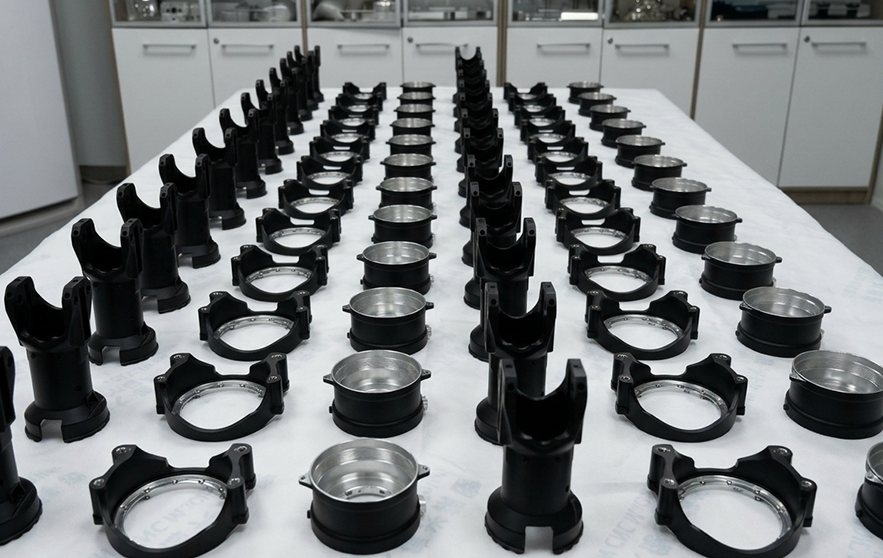
In humanoid robotics, every joint and limb must withstand repetitive impact loads, support significant weight, and maintain precise alignment through millions of cycles. Leveraging years of experience in precision manufacturing for the automotive and industrial sectors, our process ensures components meet extreme mechanical demands.
The following table illustrates the performance gap specifically for robotic structural applications:
| Feature / Metric | CNC Machining (Dadesin Standard) | 3D Printing (SLA/FDM/SLM) | Impact on Robotics |
|---|---|---|---|
| Dimensional Tolerance | ±0.005mm to ±0.01mm | ±0.1mm to ±0.3mm | Affects joint rotation and sensor alignment. |
| Material Strength | Isotropic (Uniform) | Anisotropic (Weak between layers) | CNC parts withstand higher repetitive loads. |
| Minimum Wall Thickness | Down to 0.5mm | 0.8mm to 1.2mm | Allows for extreme skeleton lightweighting. |
| Surface Finish (Ra) | 0.2μm – 0.8μm | 3.2μm – 25μm | Reduces friction in moving joints. |
| Scalability | High (1 to 1,000+ units) | Low (Cost per part remains high) | More cost-effective for pilot production. |
A robot’s ability to perform delicate tasks depends on the tolerance control of its joints.
While the CNC-machined skeleton provides the necessary structural rigidity for a humanoid robot, the internal electronic architecture relies heavily on precise signal transmission. For seamless connectivity between the robot's main controller and its various sensors, many designers specify M12 connectors known for their vibration resistance and high-speed data capabilities, ensuring the mechanical frame and the electronic systems work in perfect harmony.
Reducing weight without sacrificing structural stiffness is a critical engineering challenge.
Robotic parts demand specific materials to function reliably in harsh operating environments.
| Component | Key Requirement | Recommended Material |
|---|---|---|
| Articulated Flange | High concentricity & zero play | Aluminum 7075-T6 |
| Torque Sensing Unit | High-standard stability | Stainless Steel 17-4 PH |
| Robotic Arm Link | Lightweight & stiffness | Titanium Ti-6Al-4V |
| Hip/Knee Frame | Fatigue & impact resistance | Aerospace-grade Alloys |
Transitioning to a pilot fleet requires strict adherence to ISO 9001:2015 standards.
While 3D printing is valuable for form validation, CNC machining is the only path to engineering excellence for structural skeletons and load-bearing joints. By leveraging CNC for functional prototypes, manufacturers ensure their platforms are ready for real-world deployment.
Shorten your R&D cycles with our high-precision manufacturing services:
Upload your CAD files today for a professional DFM evaluation and competitive quote within 24 hours.
By continuing to use the site you agree to our privacy policy Terms and Conditions.