For engineers and procurement specialists, choosing between CNC machining and 3D printing is a critical decision that impacts cost, lead time, and part performance. Both are digital manufacturing technologies, but they are founded on opposite principles: one is subtractive (CNC), the other additive (3D Printing). The table below provides a quick, high-level comparison to guide your initial assessment.
| Attribute | 3D Printing | CNC Machining |
|---|---|---|
| Best For | Prototypes, complex geometries, low-volume custom parts | High-strength functional parts, high-volume production, precision components |
| Material Strength | Anisotropic (varies by direction); typically 10%-100% of native material | Isotropic; 100% of native material properties |
| Dimensional Accuracy | Good (±0.1 mm to ±0.5 mm) | Excellent (±0.025 mm and tighter) |
| Surface Finish | Layered texture; often requires post-processing | Smooth, as-machined finish directly from the machine |
| Design Freedom | Essentially unlimited; excels with organic shapes and internal features | Limited by tool access and undercuts |
| Cost Driver | Material volume and machine time | Programming, setup, and machine time |
| Lead Time | Very fast for first article | Longer setup, faster for subsequent duplicates |
3D Printing, technically known as Additive Manufacturing (AM), refers to a family of processes that construct physical objects from digital models by adding material in successive layers. The journey begins with a 3D CAD model, which is digitally sliced into thin horizontal layers. This stack of 2D images guides the printer as it builds the part from the bottom up. Common technologies include:
FDM (Fused Deposition Modeling): A thermoplastic filament is heated and extruded through a nozzle onto the build platform.
SLA (Stereolithography): An ultraviolet laser selectively cures a vat of liquid photopolymer resin, solidifying it layer by layer.
SLS (Selective Laser Sintering): A high-power laser fuses small particles of polymer powder into a solid structure.
Unrestricted Design Freedom: This is the single most significant advantage. 3D printing can produce complex geometries—such as intricate internal channels, honeycomb structures, and fully assembled mechanisms—that are impossible to create with traditional subtractive methods.
Rapid Prototyping and Iteration: The digital-to-physical workflow requires no tooling, enabling the production of a functional part within hours. This dramatically accelerates design cycles and allows for rapid validation of form, fit, and function.
Cost-Effectiveness for Low Volumes & Complexity: For one-off parts, custom jigs, or small batches, 3D printing is exceptionally cost-efficient. The cost is primarily driven by material usage, with no upfront investment in custom fixtures or complex programming.
Office-Friendly and Accessible: Desktop 3D printers are increasingly common in office and engineering environments, requiring only modest operator training for successful operation.
Anisotropic Mechanical Properties: The layer-by-layer construction often results in parts that are weaker in the Z-axis (between layers). For example, an FDM ABS part may only achieve 10-20% of the strength of molded ABS, whereas SLS nylon can approach 100%. This directional weakness must be accounted for in load-bearing applications.
Challenges with Precision and Surface Finish: While dimensional accuracy is good, it is generally inferior to CNC machining. The layer height dictates the "stair-stepping" effect visible on sloped or curved surfaces, resulting in a textured finish that often requires post-processing to smooth.
Material Limitations and Approximations: Although the material library is expanding, 3D printing materials are often proprietary formulations. They may not perfectly replicate the thermal, chemical, or mechanical performance of true engineering-grade thermoplastics or metals.
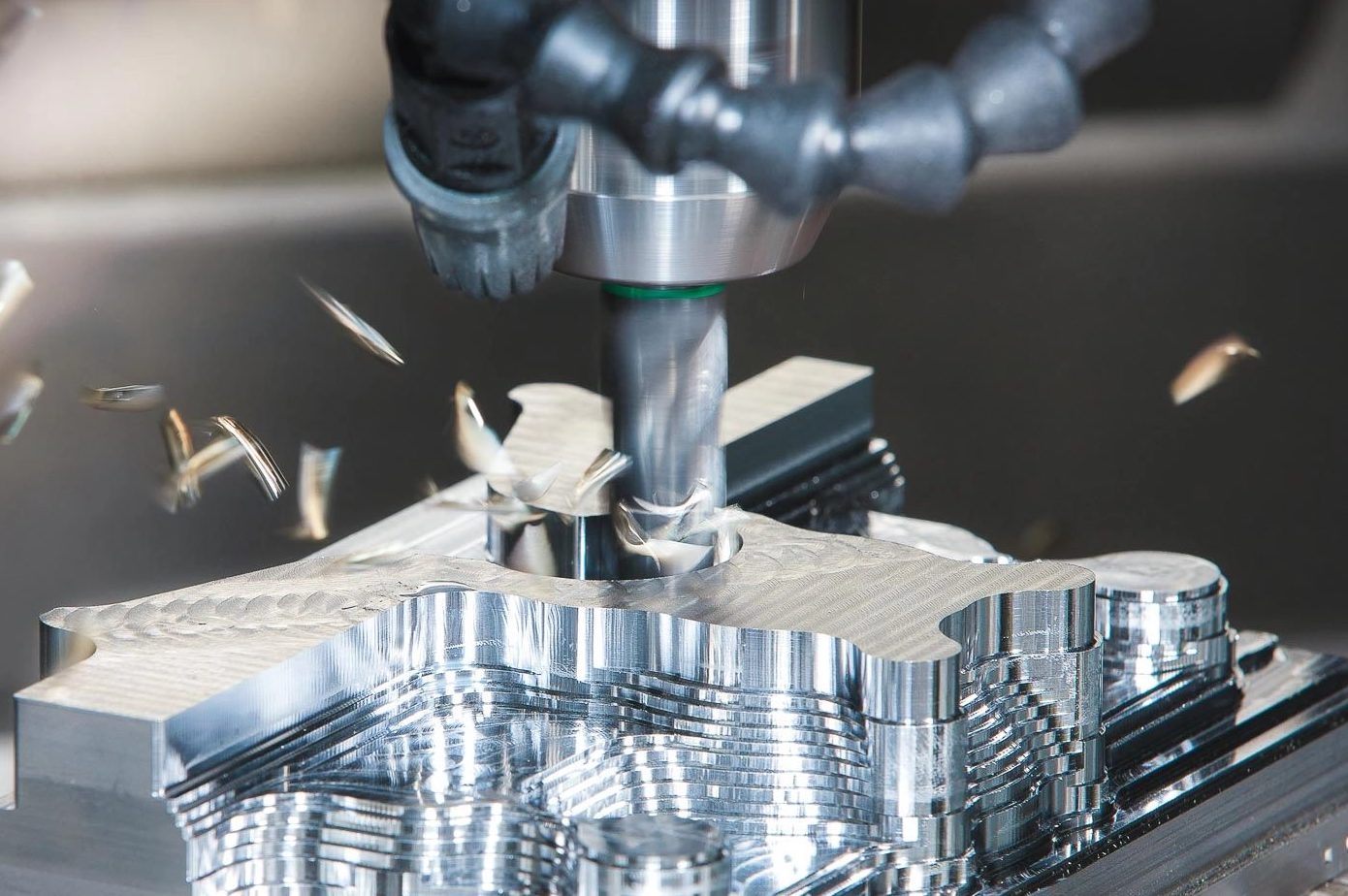
CNC Machining is a subtractive manufacturing process that uses computerized controls to manage the movement of cutting tools—such as mills, lathes, and routers—to remove material from a solid block (the "blank"). The process follows a toolpath generated from a CAD model by CAM (Computer-Aided Manufacturing) software, precisely carving away material until the final part is achieved.
Superior Material Properties and Performance: Since CNC parts are milled from a solid billet, they are fully dense and exhibit isotropic mechanical properties identical to the raw material. This guarantees high strength, excellent thermal stability, and reliable performance in demanding environments.
Exceptional Precision and Repeatability: CNC machining is renowned for its ability to hold extremely tight tolerances (as fine as ±0.025 mm) with high repeatability across production runs. This makes it indispensable for creating mating parts, precision assemblies, and high-performance components.
Vast Material Compatibility: The process is compatible with an extensive range of materials, including engineering plastics (PEEK, Polycarbonate), metals (Aluminum, Stainless Steel, Titanium), woods, and composites.
Excellent Surface Finish: The direct result of a CNC machined part is a high-quality, smooth surface that can often be used without further finishing. Superior finishes can be achieved through slower cutting speeds and specialized toolpaths.
Geometric Constraints and Design for Manufacturability (DFM): The process is inherently limited by the geometry and reach of the cutting tool. Deep internal cavities, certain undercuts, and sharp internal corners are impossible to produce. Complex parts often require multiple setups and custom fixtures (jigs), increasing cost and lead time.
Higher Upfront Cost and Time Investment: Significant time and expertise are required for CAM programming, tool selection, and the design/fabrication of workholding solutions. This makes CNC economically challenging for single prototypes.
Material Waste: As a subtractive process, CNC machining generates significant material waste (swarf), which can increase the cost of expensive raw materials.
Demanding Skill Requirements: Operating CNC machinery and, more critically, creating efficient and error-free toolpaths requires highly skilled and experienced programmers and machinists.
Moving beyond technical specifications, the optimal choice depends on your project's phase and primary goal. The following guidelines outline the most reliable decision paths.
For Prototyping and Rapid Iteration
Primary Driver: Speed and Design Flexibility
Recommended Process: 3D Printing
Reasoning: When the goal is to quickly validate a design, 3D printing's minimal setup time allows for functional parts within hours, not days. It is ideal for testing form, fit, and basic function during the R&D cycle.
For Low-Volume, Complex, or Custom Parts
Primary Driver: Geometric Complexity and Customization
Recommended Process: 3D Printing
Reasoning: For producing one-off parts or small batches that feature intricate internal channels, lattices, or organic shapes, 3D printing is often the only viable and cost-effective method.
For Functional Parts and Pilot Production
Primary Driver: Material Performance and Reliability
Recommended Process: CNC Machining
Reasoning: When parts must withstand structural loads or match final production quality for market testing, CNC machining is essential. It provides full material strength and superior precision, justifying the higher initial setup cost for smaller batches.
For Medium to High-Volume Production
Primary Driver: Cost-Efficiency at Scale
Recommended Process: CNC Machining
Reasoning: For production runs from hundreds to thousands of units, CNC machining becomes vastly more cost-effective per part. The high upfront cost of programming and setup is amortized, resulting in a lower total cost and faster cycle times than 3D printing for identical volumes.
Ultimately, the choice between CNC machining and 3D printing is not about finding a universally superior technology, but about matching the right process to your project's specific demands for performance, complexity, timeline, and cost. CNC machining stands as the undisputed leader for parts requiring unmatched strength, precision, and surface quality, especially as volumes increase.
Ready to Leverage Precision CNC Machining for Your Project?
At Dadesin, we specialize in delivering high-quality CNC machined parts that meet the most demanding specifications. Our expertise ensures your designs are brought to life with the material integrity and exacting tolerances your products require.
Get an Instant CNC Machining Quote Today
Upload your CAD file to receive a free, detailed DFM analysis and competitive pricing in seconds. Let's transform your design into a precision-engineered reality.
By continuing to use the site you agree to our privacy policy Terms and Conditions.