Gear machining is the specialized manufacturing process of creating teeth on a gear blank to enable power transmission. The most effective methods include Gear Hobbing for high-volume external gears, Power Skiving for rapid internal gear production, and Gear Grinding for ultra-precision finishing. Selecting the right process depends on the gear type, required AGMA/ISO accuracy grades, and total production volume.
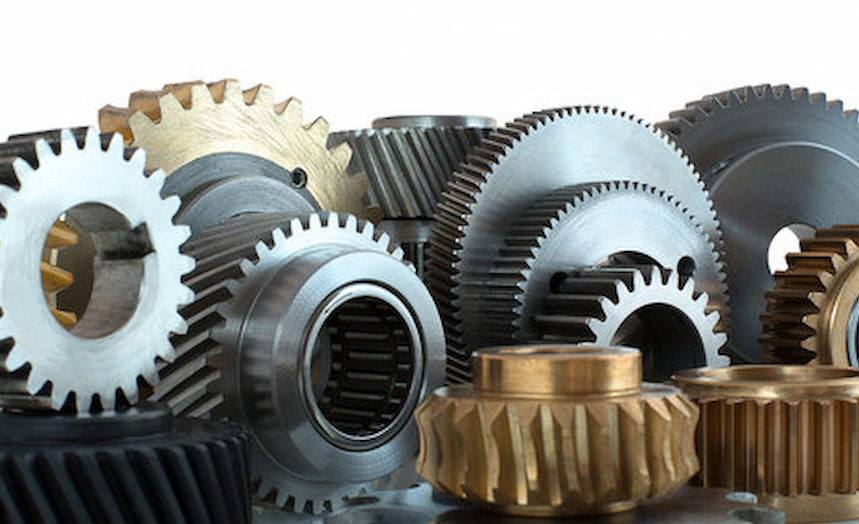
Gear machining is a subtractive manufacturing process where material is removed from a metal or plastic blank to create an involute tooth profile.
This process is critical because the geometry of the teeth determines how efficiently a machine transfers torque and speed.
Modern gear machining relies on CNC (Computer Numerical Control) technology to achieve tolerances measured in microns, ensuring that gears mesh perfectly without noise or vibration.
Gear generation is the most common way to produce gears, where the tooth shape is generated by the relative motion between the tool and the workpiece.
Gear hobbing is the industry standard for producing external spur and helical gears. It uses a rotating cutting tool called a hob that acts like a worm gear.
Because the cutting action is continuous, hobbing is incredibly fast and efficient for mass production. It is the primary choice for automotive and industrial gearbox manufacturers.
However, hobbing is limited to external gears. If your design requires internal teeth, you must look toward other methods like skiving or shaping.
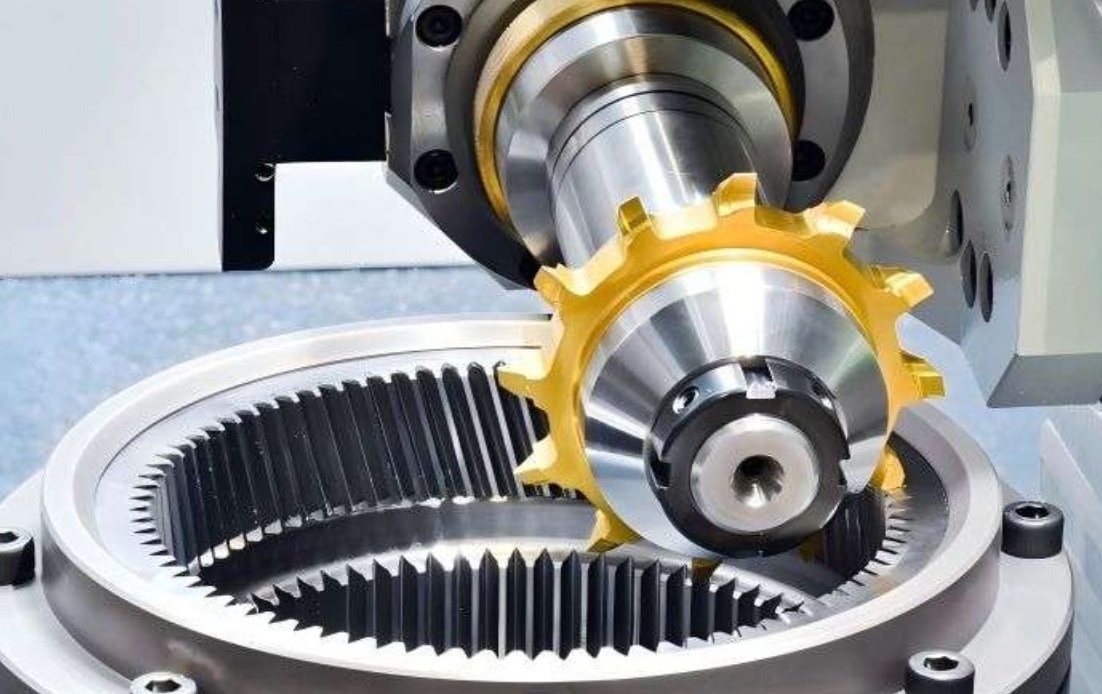
Gear skiving is a high-speed process that has revolutionized internal gear manufacturing. It is up to 8 times faster than traditional shaping.
By tilting the tool at a specific "crossing angle," the machine creates a sliding velocity that peels away material as the workpiece rotates.
This method is now the go-to solution for the internal ring gears used in Electric Vehicle (EV) planetary systems and high-end robotics.
Gear shaping uses a reciprocating tool that mimics a mating gear. The tool moves up and down while both the tool and blank rotate slowly.
The biggest advantage of shaping is its ability to machine gears with "interferences," such as teeth located right next to a larger shaft or a shoulder.
While slower than skiving or hobbing due to the non-cutting return stroke, it remains an essential tool for complex geometries and small-to-medium batches.
In forming methods, the shape of the tooth is created by the profile of the cutting tool itself, rather than the movement of the machine.
Gear milling uses a form cutter or an end mill to cut one tooth gap at a time. After each cut, the gear indexes to the next position.
This method is ideal for prototyping or very large gears where dedicated hobbing tools would be too expensive or unavailable.
Since it can be done on a standard 5-axis CNC machining center, it offers great flexibility for custom gear profiles without specialized machinery.
Broaching involves pulling or pushing a long, multi-toothed tool (a broach) through a hole to form internal splines or gears in a single pass.
It is the fastest possible method for internal gears but requires extremely expensive, custom-made tools.
As a result, broaching is strictly reserved for massive production runs, such as high-volume automotive transmission components.
Cutting the gear is only the first stage. After a gear is heat-treated to increase its hardness, it often warps slightly. Finishing is required to correct these errors.
Gear grinding is a finishing process that uses an abrasive wheel to refine the tooth surface. It is the only way to reach AGMA 14 or 15 precision grades.
For the EV industry, grinding is mandatory. It eliminates the microscopic imperfections that cause high-frequency gear whine, ensuring a silent ride.
Honing is a slower finishing process that improves the surface texture rather than the overall geometry.
The "cross-hatch" pattern created by honing helps retain lubrication on the tooth surface, which significantly extends the service life of the gear under heavy loads.
The choice of material affects both the machining speed and the final durability of the component.
Selecting the right method requires balancing three main factors: Cost, Volume, and Precision.
If you are producing 10 pieces for a prototype, Gear Milling on a 5-axis CNC is usually the most cost-effective because it uses standard tools.
For production runs of 1,000 to 100,000 pieces, Gear Hobbing (for external) and Gear Skiving (for internal) are the clear winners in terms of efficiency.
If your application requires high-speed rotation (over 5,000 RPM), you must include Gear Grinding in your process to ensure reliability and low noise.
Modern multitasking machines require specific software and hardware options to perform gear cutting effectively.
The gear industry is moving toward higher precision and more sustainable manufacturing techniques.
Gear machining is a complex blend of ancient mechanical principles and cutting-edge digital technology. From the high-speed efficiency of Hobbing to the extreme precision of Grinding, each method serves a specific purpose in modern manufacturing.
At Dadesin, we specialize in high-precision CNC machining services, providing end-to-end solutions for gear manufacturing. Whether you need rapid prototypes or high-volume production, our state-of-the-art facility is equipped to handle the most demanding gear geometries and tolerances.
Ready to bring your gear design to life? Contact Dadesin Today for a fast quote. Our team of expert engineers is ready to help you optimize your gear design for manufacturability and performance. Partner with a factory that understands precision.
Q: What is the most common gear machining method?
A: Gear hobbing is the most common for external gears due to its speed and versatility.
Q: Can internal gears be hobbed?
A: No, hobbing tools are too large to fit inside. Internal gears are typically shaped, skived, or broached.
Q: Why are ground gears more expensive?
A: Grinding requires more expensive machinery, longer cycle times, and specialized abrasive tools to reach ultra-high precision.
By continuing to use the site you agree to our privacy policy Terms and Conditions.