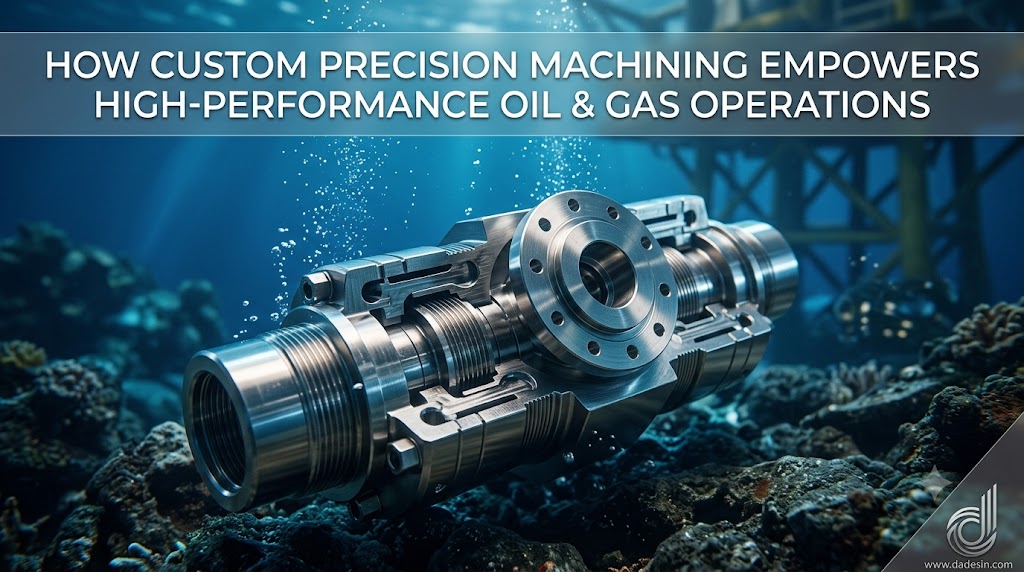
In harsh environments miles beneath the ocean surface or inside high-pressure fluid lines, a mechanical imperfection thinner than a human hair can trigger catastrophic failure. For the oil and gas sector, high-tolerance manufacturing is not just a quality standard—it is the foundational defense for asset integrity, operational safety, and continuous production.
Upstream drilling, midstream transportation, and downstream petrochemical refining subject mechanical assemblies to harsh, relentless conditions. Off-the-shelf commercial fasteners, valves, and housings are simply not built to handle these combined stress factors.
In High-Pressure, High-Temperature (HPHT) reservoir environments, operating temperatures often cross 200°C (392°F) while hydrostatic pressures exceed 20,000 psi.
Standard off-the-shelf components lack the micro-dimensional tolerances required to accommodate local thermal expansion. Under continuous pressure cycling, these subtle geometric flaws lead to:
Rapid seal degradation
Severe thread galling
Uncontrolled pressure loss
Exposure to sour gas laden with hydrogen sulfide ($$\text{H}_2\text{S$$), carbon dioxide ($$\text{CO}_$$), and heavy brine creates a highly corrosive atmosphere. Standard carbon steel rapidly succumbs to Sulfide Stress Cracking (SSC) and Chloride Stress Corrosion Cracking (CSCC).
Mitigating these failures demands high-density, corrosion-resistant superalloys. However, basic casting processes often leave internal voids that compromise structural density.
Custom precision manufacturing solves this engineering challenge by machining parts directly from fully certified, solid billet or forged bar stock using optimized CNC toolpaths.
Having identified the limits of standard hardware, let's examine how custom precision machining directly elevates safety, regulatory compliance, and equipment service life across high-stakes energy assets.
Volatile hydrocarbons, hazardous chemicals, and high-pressure gases leave no room for error. A minor surface imperfection on a valve seat or flange face can create an immediate leak path.
Advanced CNC milling and turning routines hold dimensional tolerances down to $$\pm 0.005\text{ mm$$ ($$\pm 0.0002\text{ in$$). This precision ensures that mating surfaces, O-ring grooves, and threaded connections form gas-tight, pressure-retaining mechanical joints.
To survive aggressive chemical environments, hardware relies on exotic metals. Machining these alloys requires rigid machine setups, specialized carbide tooling, and finely tuned speed-and-feed parameters to prevent work-hardening:
| Exotic Alloy Family | Core Mechanical Properties | Primary Oilfield Applications |
| Inconel 718 / 625 | High tensile strength at elevated temperatures; oxidation resistance | Subsea wellhead components, valve stems, logging tools |
| Hastelloy C-276 | Exceptional resistance to pitting, crevice corrosion, and strong oxidizers | Downhole chemical injection systems, acidizing tools |
| Titanium Grade 5 (Ti-6Al-4V) | High strength-to-weight ratio; total immunity to seawater | Deepwater riser components, marine sensors, subsea robotics |
| Duplex / Super Duplex Steel | High yield strength with superior resistance to chloride pitting | Flowlines, manifold pipe manifolds, heat exchanger tube sheets |
Deep-well drilling tools, mud motor assemblies, and high-pressure pumps endure relentless rotational torque, shock impact, and fluid abrasion. Multi-axis precision finishing achieves smooth surface roughness profiles down to $$Ra\text{ 0.4 }\mu\text{m} - 0.8\ \mu\text{m$$.
Eliminating microscopic tool marks removes localized stress concentration points. This directly delays fatigue failure and significantly extends the working life of dynamic components.
Exotic nickel and titanium superalloys account for a major portion of component costs. Multi-axis CNC programming optimizes tool paths to maximize material yield from raw billet stock. High repeatability across prototypes and production runs ensures valuable raw material is not lost to scrap.
When an offshore rig or refinery experiences an unexpected equipment breakdown, waiting weeks or months for custom casting tooling is economically unfeasible.
Direct CNC machining bypasses casting molds entirely, cutting parts straight from digital CAD models. This digital workflow enables rapid turnaround times for critical replacement hardware, saving operators millions in avoided downtime.
Just as extreme oilfield equipment requires uncompromising accuracy, similar demands apply across other advanced engineering sectors—such as Dadesin custom automotive precision machining, where micron-level tolerances and rigorous quality controls are applied to high-spec mechanical and structural assemblies.
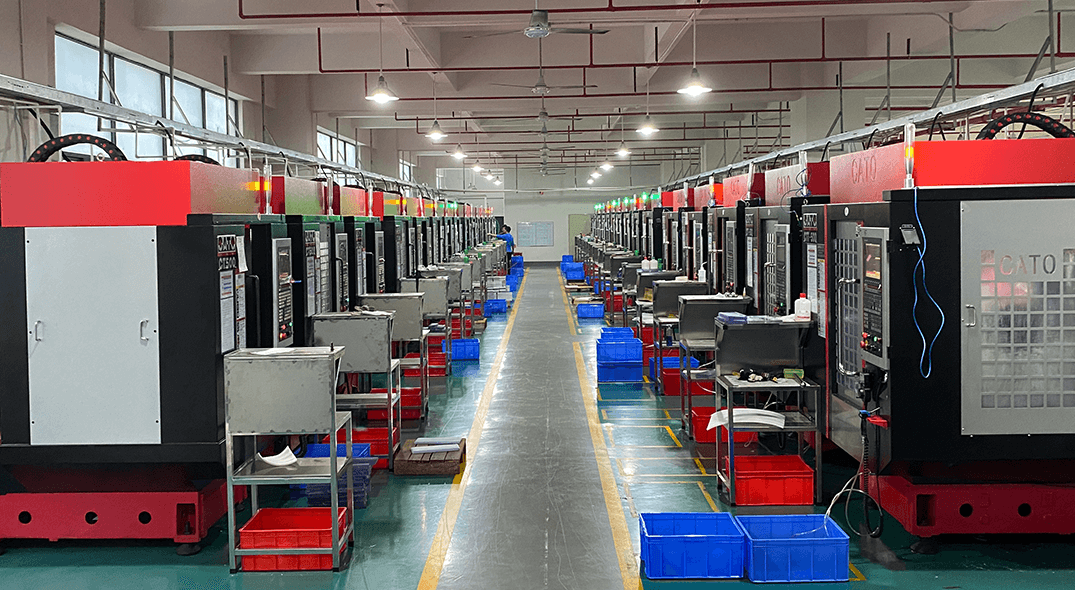
Transforming raw superalloys into severe-service components demands advanced equipment and precise technical execution.
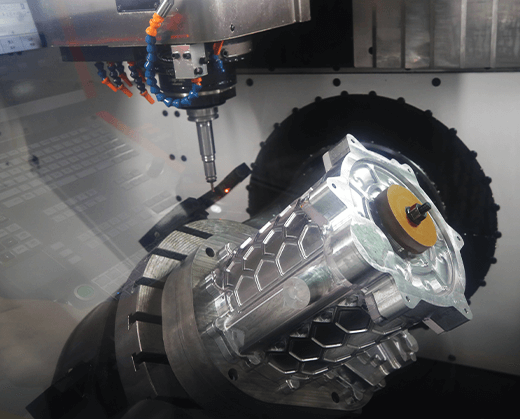
Complex fluid handling components, such as multi-port valve bodies and subsea trees, feature intersecting internal flow paths and off-axis bores.
Utilizing 5-axis simultaneous CNC milling and multi-turret mill-turn centers allows machinists to execute complex geometric features in a single machine setup. This single-setup approach eliminates re-clamping misalignments, ensuring absolute bore concentricity, precise hole alignment, and true geometric positioning.
Logging-while-drilling and measurement-while-drilling tool bodies require long, straight internal channels for sensor routing and hydraulic fluids.
Specialized deep-hole gun drilling achieves exceptional length-to-diameter ratios while maintaining strict radial drift limits. Furthermore, CNC thread turning cuts API Spec 6A and proprietary premium threads with zero chatter, creating gas-tight mechanical joints.
In high-consequence applications, component validation is just as vital as the machining process itself. A robust quality management framework relies on multi-layered inspection protocols to verify dimensional accuracy and metallurgical integrity before field deployment.
To ensure strict drawing compliance, completed parts undergo verification inside climate-controlled quality labs using Coordinate Measuring Machines (CMM). These systems verify volumetric tolerances down to $$\pm 0.002\text{ mm$$, confirming pitch diameters, thread profiles, and geometric surface alignments.
Severe-service parts undergo non-destructive evaluation to confirm the absence of sub-surface defects or micro-cracks:
Positive Material Identification (PMI): X-ray fluorescence (XRF) spectroscopy verifies exotic alloy chemistry to prevent material mix-ups.
Liquid Penetrant (LPI) & Magnetic Particle Inspection (MPI): Ensures zero surface micro-cracks on critical load-bearing features.
Complete Documentation: Components arrive with full EN 10204 3.1 Material Test Reports (MTRs), heat-number tracking logs, and hardness testing documentation confirming compliance with NACE MR0175/ISO 15156 for sour gas environments.
Why is 5-axis CNC machining necessary for oilfield components?
5-axis CNC machining handles complex geometries and intersecting fluid ports in a single setup, eliminating re-clamping errors and ensuring absolute bore concentricity.
How does fine surface finishing help prevent failure in sour gas environments?
Ultra-smooth finishes remove microscopic chatter marks and stress concentration points where corrosive hydrogen sulfide can initiate stress corrosion cracking.
What dimensional tolerances can custom CNC machining achieve for oil & gas parts?
Precision CNC machining routinely achieves tolerances down to $$\pm 0.005\text{ mm$$ on critical sealing surfaces, valve seats, and high-pressure threaded connections.
Can CNC machining support rapid prototyping or emergency replacement orders?
Yes. CNC machining cuts components directly from solid CAD models without requiring custom casting molds, making it ideal for rapid prototyping and urgent emergency replacement parts.
What quality documentation accompanies severe-service machined components?
Components are supplied with complete EN 10204 3.1 Material Test Reports , CMM dimensional inspection logs, NDT reports, and NACE MR0175 hardness compliance certificates.
From subsea production trees on the ocean floor to high-pressure downstream refining facilities, custom precision machining provides the structural strength, tight tolerances, and material integrity required to keep critical energy operations running safely. Leveraging multi-axis CNC technology and specialized exotic alloy processing mitigates catastrophic failure risks, protects personnel, and minimizes costly operational downtime.
At Dadesin, our engineering team and certified manufacturing facilities are equipped to handle your most challenging severe-service machining projects. Contact us today or upload your CAD models directly to receive a prompt manufacturability review and competitive quote from our technical specialists.
By continuing to use the site you agree to our privacy policy Terms and Conditions.