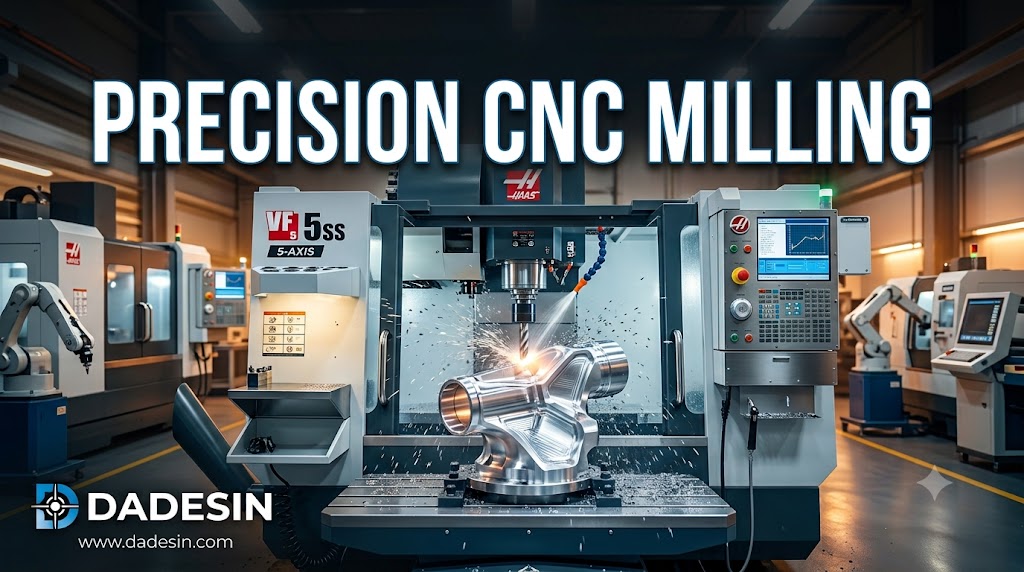
In today's fast-moving industrial sector, OEMs and engineering teams face constant pressure to deliver high-performance parts on tight schedules.
To meet these demands, Computer Numerical Control (CNC) milling uses automated rotary tools to shape raw metals and polymers into complex components with impressive sub-millimeter accuracy.
By partnering with a dedicated machining provider, companies can avoid heavy capital investments in equipment while boosting overall efficiency. Understanding how these CNC milling services work—and the concrete value they bring—helps procurement managers and engineers simplify production and stay ahead of the curve.
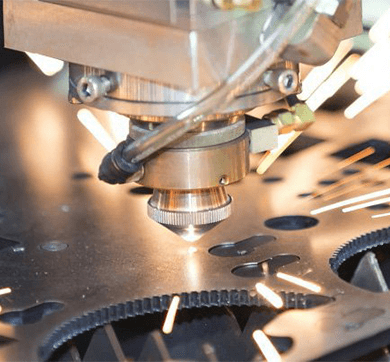
At its core, precision CNC milling is a subtractive manufacturing process. Multi-axis cutting tools trim material from a solid block according to digital CAD/CAM files.
Manual milling relies heavily on operator technique, physical templates, and constant re-fixturing. In contrast, CNC milling runs on closed-loop software, taking human error out of the equation.
| Performance Metric | Traditional Manual Machining | Precision CNC Milling Services |
| Typical Tolerances | ±0.1 mm to ±0.2 mm | Down to ±0.002 mm (±0.00008 in) |
| Setup & Human Error Risk | High (requires manual alignment every time) | Very low (runs on automated digital toolpaths) |
| Complex 3D Geometries | Limited to simple flat or round cuts | Handles virtually any multi-axis contoured surface |
| Batch Consistency | Shifts from part to part and operator to operator | Identical results from part 1 to part 100,000 |
| Production Speed | Slow and labor-intensive | Fast, automated, and multi-spindle capable |
When manufacturing high-spec components, accuracy is everything. Modern CNC milling setups consistently hold tight tolerances down to ±0.005 mm (±0.0002 inches) or better.
This extreme accuracy relies on advanced real-time tracking systems:
Optical Encoders: Provide continuous feedback on axis positions.
Closed-Loop Servos: Instantly correct tiny positioning shifts.
Building on high positioning accuracy, multi-axis CNC machines can approach a workpiece from almost any angle.
Systems with 4-axis and simultaneous 5-axis motion can produce features that are impossible on manual tools:
Intricate Internal Channels: For fluid transfer or conformal cooling passages.
Deep Cavities: Engineered with narrow clearances and precise wall angles.
Smooth Organic Curves: Ideal for aerodynamic turbine blades and ergonomic medical device handles.
Beyond handling complex geometry, CNC milling centers adapt easily to diverse materials—from lightweight alloys to heat-resistant metals and technical polymers.
Common raw materials and industry applications include:
Aluminum Alloys (6061-T6, 7075-T6, 2024): Excellent strength-to-weight ratio for aerospace structural brackets and drone frames.
Stainless Steels (304, 316L, 17-4 PH): Superior corrosion resistance for surgical instruments, food-grade pumps, and marine hardware.
Engineering Plastics (PEEK, Delrin/POM, PTFE, Nylon): Low friction and electrical insulation for semiconductor chip carriers and wear bushings.
Exotic Metals (Titanium Grade 5, Inconel 718, Tool Steels): Exceptional thermal resistance for orthopedic joint implants and turbomachinery components.
Working with diverse materials is only half the battle; keeping part dimensions uniform across high volumes is just as crucial.
CNC milling machines run the exact same digital G-code instructions on every cycle. Once a toolpath is dialed in and tested, the 1st part and the 10,000th part turn out identical in shape, finish, and structural strength.
Automated consistency translates directly into faster turnarounds. Outsourcing CNC milling cuts down production cycles through a combination of high-speed digital workflows:
Quick Digital Setup: Direct CAM file conversion eliminates physical template creation.
High-Speed Spindles: Remove high volumes of material rapidly without overheating.
Automatic Tool Changers (ATCs): Store dozens of tools in a single magazine and swap them in seconds.
Speed brings direct cost savings, especially compared to processes like injection molding or die casting that require expensive custom molds.
CNC milling cuts parts directly from digital CAD files, eliminating upfront tooling expenses. Early Design for Manufacturability (DFM) reviews further drive down costs by optimizing fixture setups and toolpaths before cutting begins.
Cost-effective setups do not mean sacrificing surface quality. Modern CNC milling centers deliver clean, refined surfaces straight from the machine bed.
Key factors that maintain superior surface quality:
Sturdy Machine Bases: Dampen vibration to prevent tool chatter.
Smart Cutting Strategies: Maintain ideal chip loads across complex toolpaths.
Targeted Coolant Delivery: Prevents heat warping and premature tool wear.
Parts routinely achieve surface roughness levels of Ra 1.6 µm to Ra 0.8 µm. This makes them immediately ready for post-processing treatments like anodizing, electropolishing, or powder coating.
Predictable surface quality and controllable costs make it simple to transition from early testing to high-volume manufacturing.
During early R&D, engineers can order small prototype batches for hands-on fit testing. Once the design is verified through DFM analysis, the exact same CAD files, clamping strategies, and toolpaths scale up to full-volume production without needing to re-engineer the process.
As production scales up, keeping material waste down becomes a major factor in controlling total costs.
Modern CAM software optimizes material usage through intelligent programming:
Smart Nesting Algorithms: Arrange multiple parts on a single raw sheet or block to maximize material yield.
Dynamic Milling Techniques: Maintain a constant tool engagement angle, distributing cutting forces evenly.
DFM-Guided Radius Adjustments: Matching internal pocket radii to standard tool diameters reduces tool wear and machining time.
These strategies reduce scrap rates, extend cutting tool life, and support cleaner, more sustainable operations.
Tying all these advantages together is the capability of advanced 5-axis CNC machining centers.
Because the cutting tool and workpiece move along five axes simultaneously, complex multi-sided parts—such as automotive drivetrain housings and complex impeller hubs—can be completed in a single setup. This removes the need for manual repositioning, eliminating stack-up alignment errors while significantly speeding up overall cycle times.
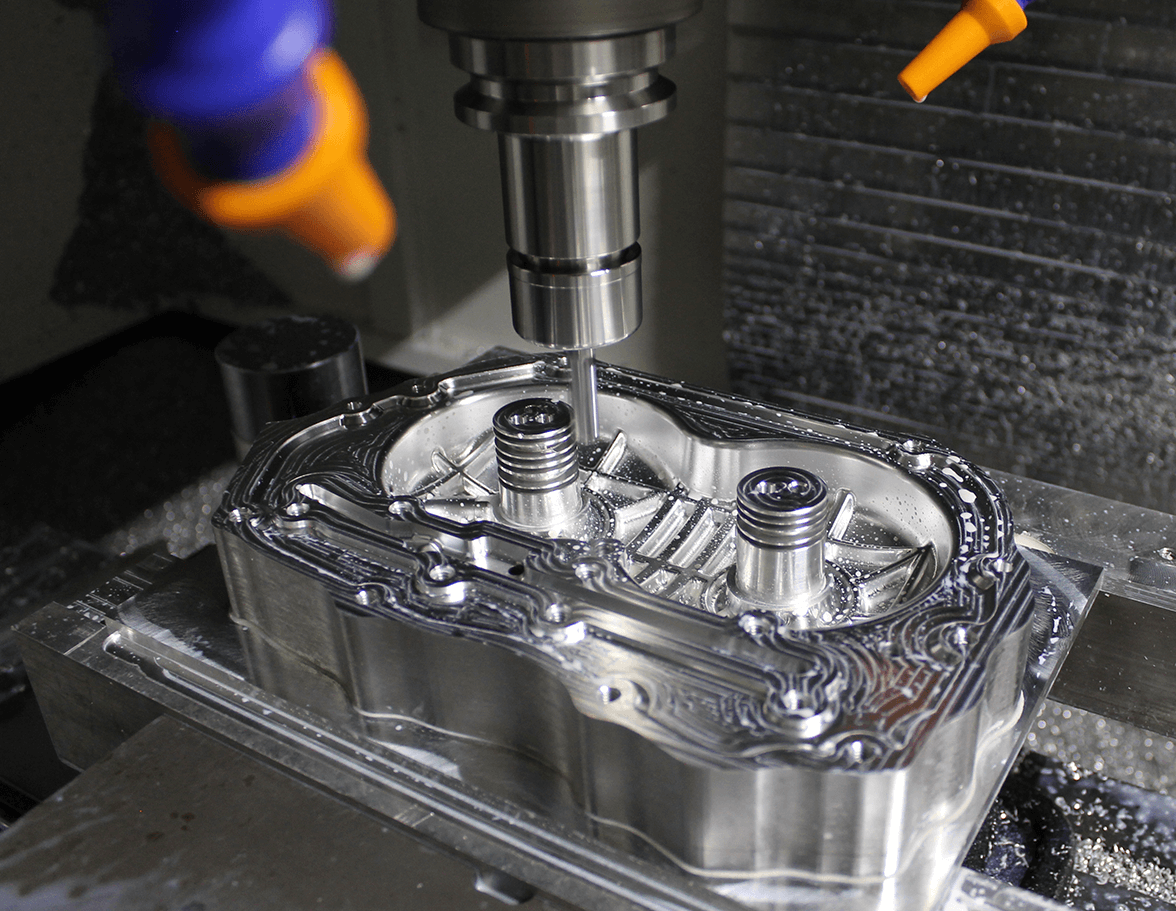
Standard CNC milling runs typically hold tolerances between ±0.05 mm and ±0.01 mm, while specialized precision setups can reach down to ±0.005 mm (±0.0002 inches).
Common choices include aluminum alloys (6061, 7075), stainless steel (304, 316), brass, copper, titanium, tool steel, and engineering plastics like PEEK and Delrin.
In 5-axis milling, the tool and workpiece rotate along two extra axes at the same time. This lets the machine cut complex 3D shapes in a single pass without manual repositioning.
Using standard internal radii, avoiding overly deep pockets, keeping wall thicknesses even, and loosening tolerances on non-critical features will noticeably bring down machining costs.
From ultra-tight tolerance control and superior surface finishes to multi-material flexibility and seamless scalability, CNC milling services deliver the precision and cost-efficiency modern industrial manufacturing demands. At Dadesin, our state-of-the-art multi-axis machinery and experienced engineering team are ready to bring your CAD designs to life—from manufacturability reviews to full-scale production.
Whether you need material guidance or a custom manufacturing solution, we are here to help. Upload your CAD files and technical drawings for an immediate manufacturability analysis, or contact us today to discuss your next project. Let Dadesin be your trusted partner for high-precision manufacturing excellence.
By continuing to use the site you agree to our privacy policy Terms and Conditions.